

The five parts of a solar system.
What each one does, and what to check when someone puts a quote in front of you - ours or anybody else's.
The part on the roof that turns sunlight into electricity.
Panels are rated in watts. A commercial panel today runs 550 to 700 watts and up; a house panel is usually 450 to 550. Past about 550 watts a panel runs close to eight feet long and gets heavy enough to need two people and a stronger roof, which is why the big ones end up on commercial buildings. Fewer, bigger panels also mean less racking for the same output, which matters when roof space is what you're short of.
Bifacial panels have glass on both sides and pick up light reflected off whatever sits beneath them. What decides whether that's worth paying for is how much air is behind the panel, not the panel itself. Bolted flush to a roof there's almost no gap and you'll see a few percent at best. On a carport, a ground mount, or anything tilted up off a pale surface, the back of the panel earns its keep.
- The wattage per panel, and how many the roof will take
- Whether they're bifacial, and whether the mounting leaves them enough room to be worth it
- The warranty term, and which kind it is - a product warranty covers the panel failing, a performance warranty guarantees output years out. Quotes rarely say which, and ‘80% at year 25’ is a performance figure at the old industry floor. Ours are 30 years.
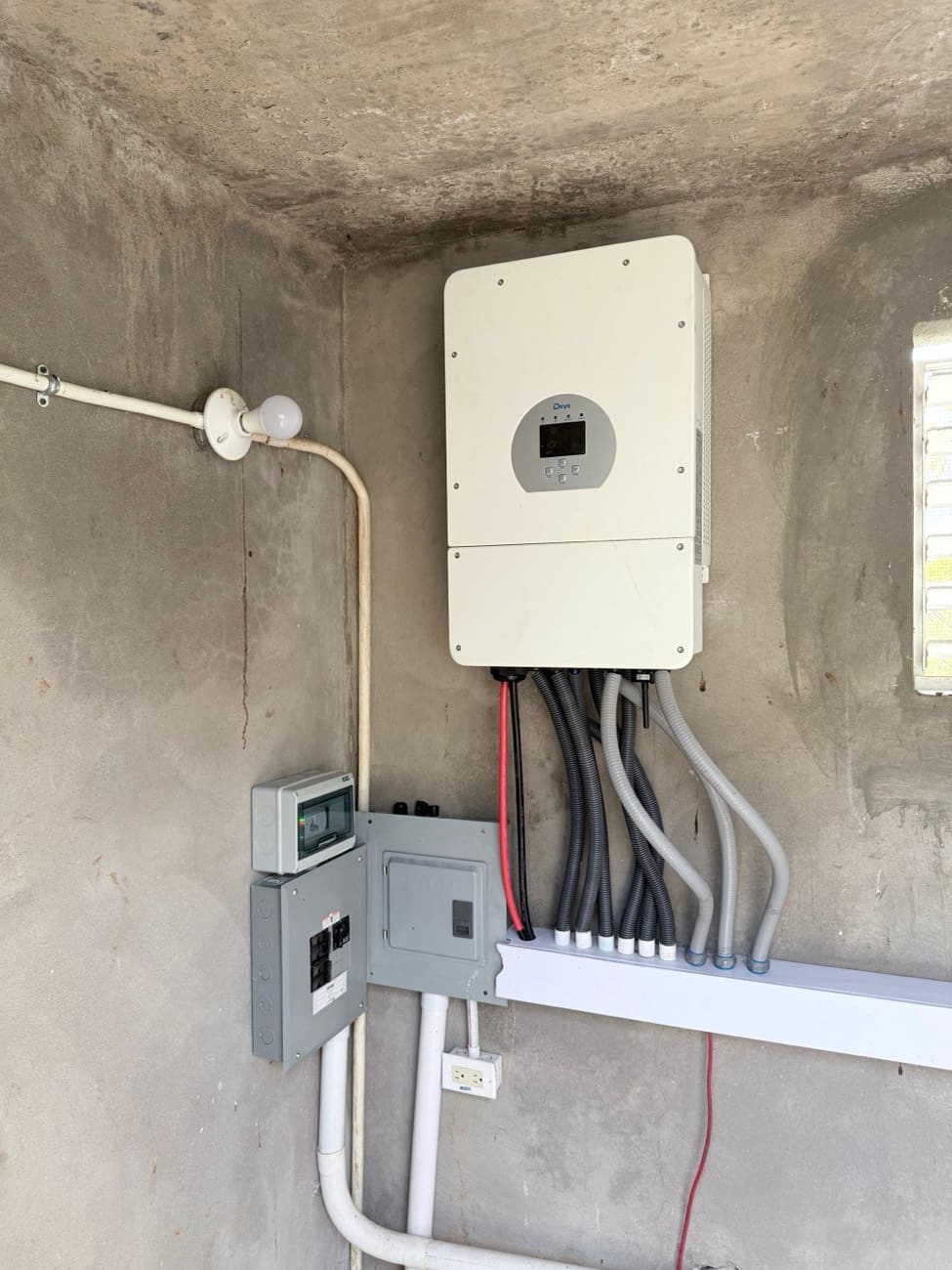
Panels make DC. Your building runs on AC. This converts it.
It's the brain of the system and the part most likely to need attention over twenty years. It also decides what happens in an outage.
A plain grid-tie inverter shuts down when the grid goes down - in full daylight, with the sun on your panels - because it isn't allowed to push power into a dead line linesmen may be working on. A hybrid inverter with a backup output can disconnect from the grid and keep running your building off the panels and the battery. Not every hybrid has that output - some store energy perfectly well and still go dark in a cut - so read the spec sheet rather than the word hybrid. If staying open through an outage is why you're looking at solar, this is the part that decides it.
- That it has a backup output, and that the circuits you care about are wired to it - a battery on its own will not keep you running
- That the model is approved for use in the country it's going into
- Whether you can see what it's doing remotely, and who watches it
- The warranty term. Ours is 5 years on the Deye inverters we fit
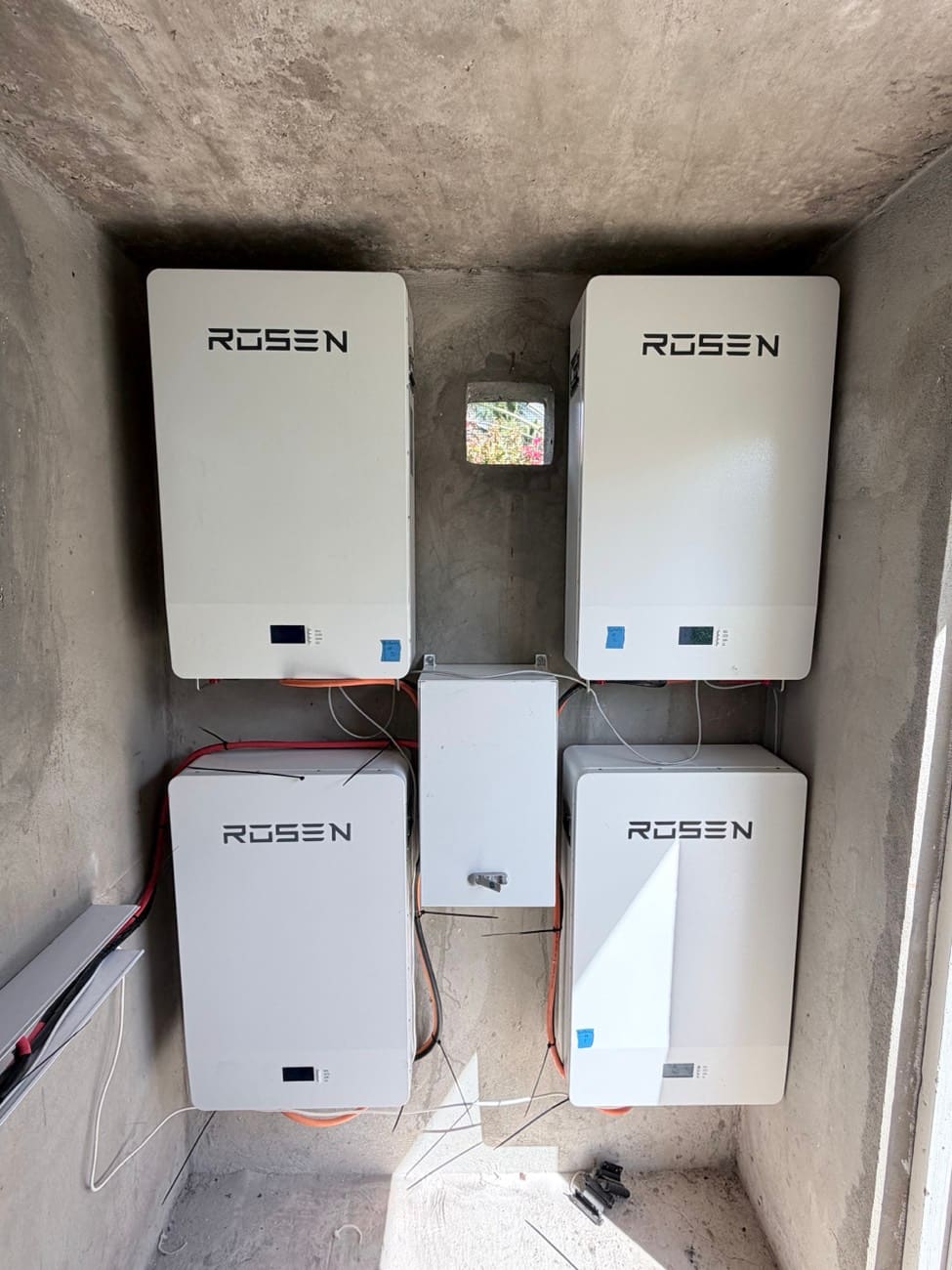
Stores what you make during the day and don't use.
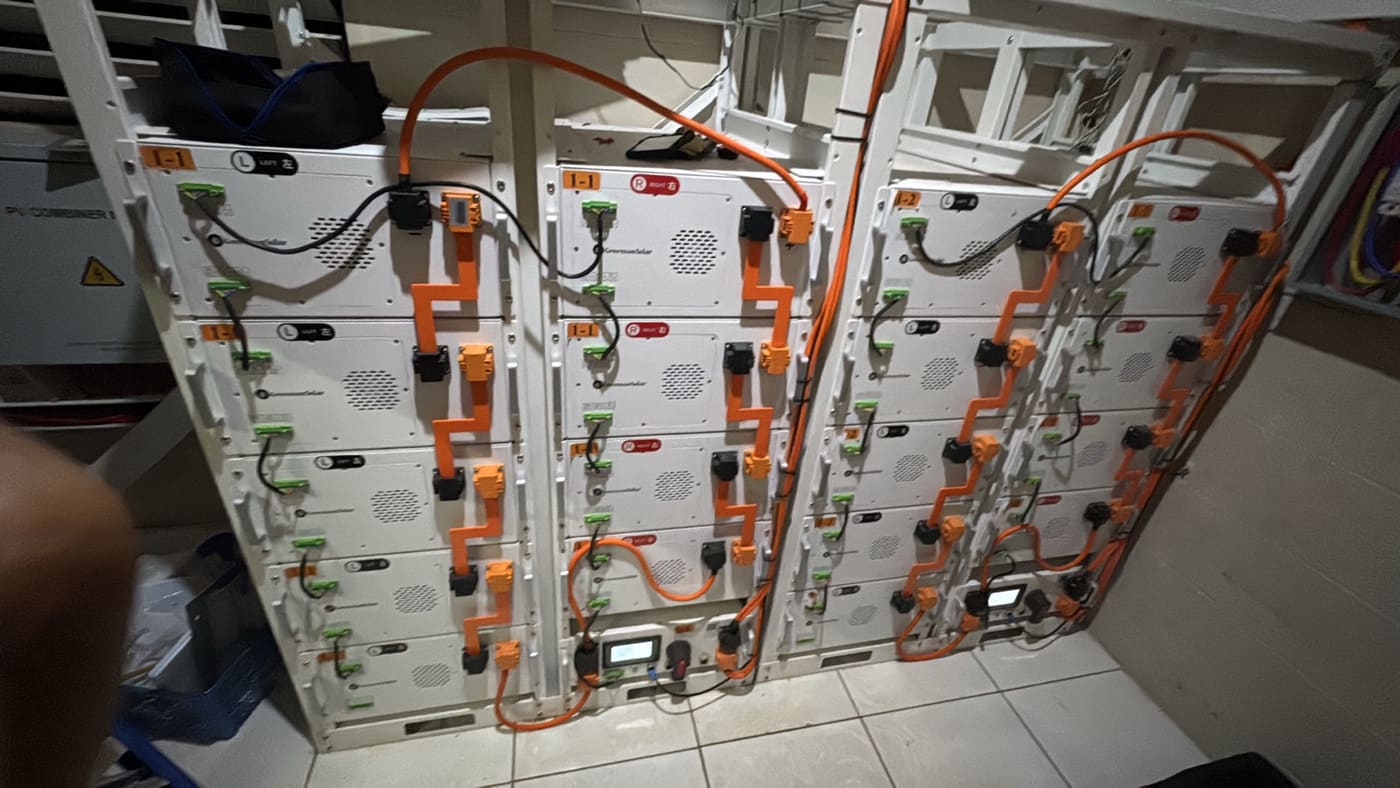
Batteries come as modules - commonly 5 to 12 kWh each - stacked into racks or hung on a wall and wired together to reach the capacity you need. Add modules, get more storage.
The sizing question isn't your whole load. It's what you need to keep running, and for how long. A restaurant that has to hold refrigeration overnight is a different sum from an office that just wants the lights and the tills through a two-hour cut.
- Usable capacity, not nameplate - they're not the same number
- The chemistry, and the cycle life that comes with it
- What it's sized to carry, and for how long
- The warranty term. Ours is 10 years on the battery
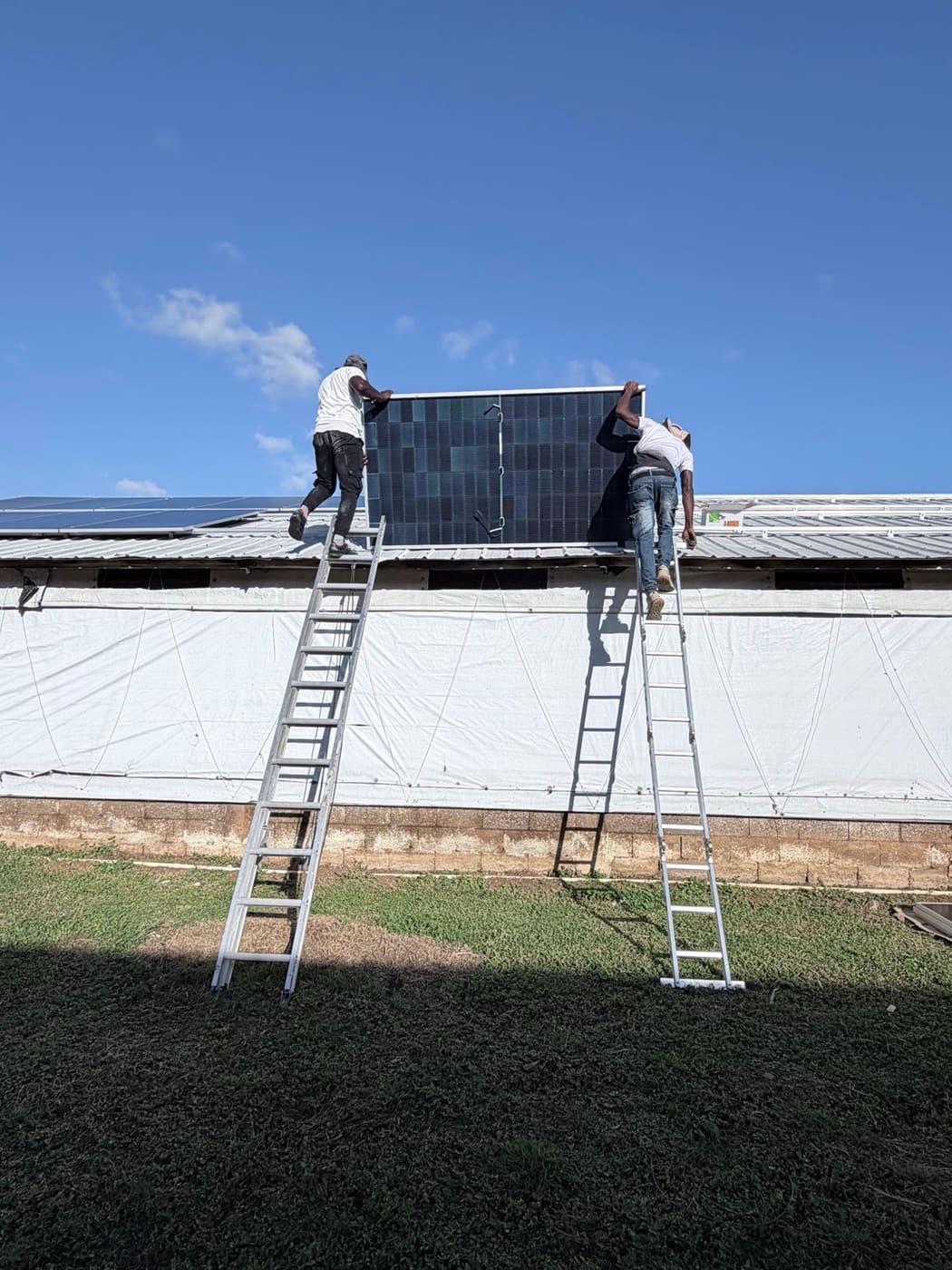
What holds the array to the building.
Rails, feet, clamps and flashings. It's the least interesting part of a quote and the part that decides whether your roof leaks in three years.
It also decides whether the array is still there after a storm. Salt air eats fixings, and a roof on the coast is a different job from the same roof inland.
- What the rails and fixings are made of, given salt air
- How the roof is penetrated and how those penetrations are sealed
- What wind loading the mounting is rated for
- The age of the roof underneath - a 25-year array on a roof with five years left means paying twice
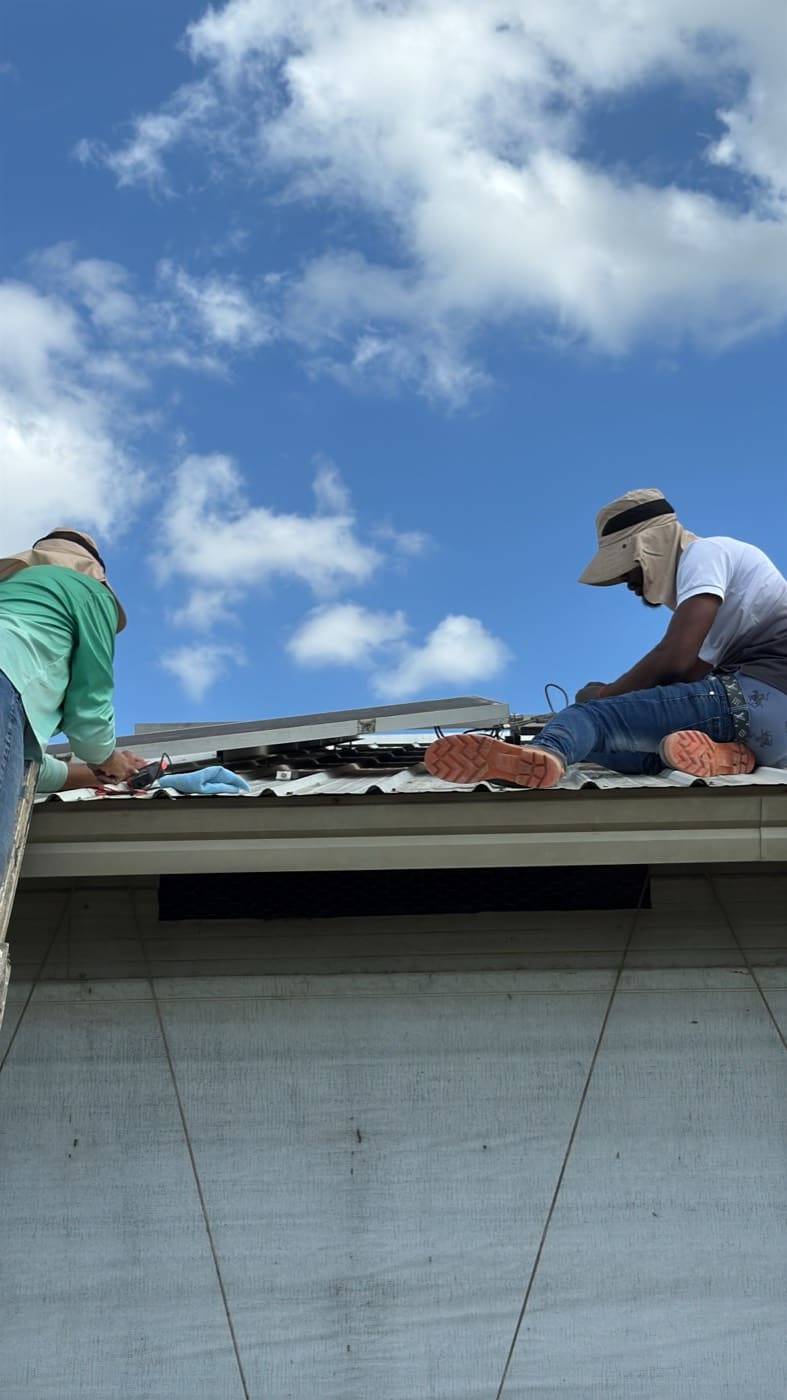
The wiring, isolators, breakers and combiner boxes between everything else.
DC from the panels runs into a combiner box, through protection, into the inverter, and out to your board. Isolators let someone switch parts of it off safely to work on them.
It's the least visible part of the job and the part an inspection looks at hardest. Cable run in conduit, properly rated and properly labelled, is also what makes the system straightforward to fault-find in year six instead of a puzzle.
The other thing protection has to do here is survive a strike. Lightning does not have to hit the array to wreck it - a strike nearby induces a surge that travels down the DC run and out through the inverter. Surge protection on both the DC and AC sides, with every metal part bonded and earthed, is what stands between a close strike and a new inverter.
- Cable in conduit rather than run exposed across a roof
- Isolators where someone will need them, and labelled
- Surge protection on the DC side as well as the AC side, given the lightning here
- How the array frames, rails and enclosures are bonded and earthed
Named equipment, so you can look it up.
You get told the make and model going onto your roof before anything is ordered. These are the lines showing up in our recent installs.



Also fitted: Deye and ROSEN.
Want this applied to your building?
A few questions and we'll tell you roughly what size system it needs, and whether we're the right people to build it.
Or call +1 876 839 0044, or email info@carribsol.com.